Thursday, October 19, 2006

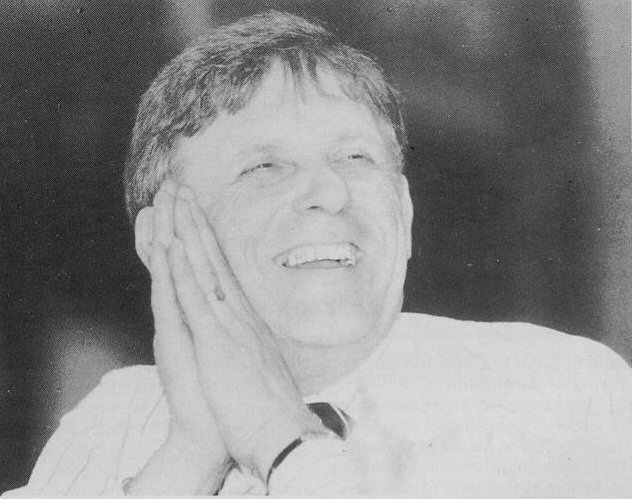
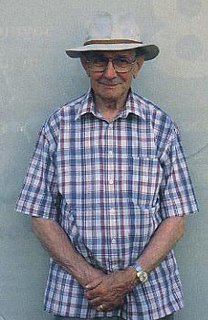
Terry Mallinson - COHSE National Officer


Terry Mallinson - COHSE National Officer

It is with great regret that COHSE announces the sudden death of Terry
Mallinson, National Officer who died on
Sunday 19 June 1983 following a
heart attack. just two days after COHSE Conference.

negotiator for ancillary and ambulance staffs, was 49 years old and had been
National Officer since 1 969.
In October he would have completed 21 years' service as a full-time officer.

Terry's death is a deep shock and a great loss both to the Confederation and
the whole trade union movement,' General Secretary David Williams said in
tribute.
'For those of us who knew him, his great love of life and tremendous
enthusiasm and energy for whatever task lay ahead, it is all the more tragic.

Terry was a trade unionist of the old school and a tough and skilled negotiator
who made the fight against low pay in the National Health Service his own personal crusade. As a passionate champion of the NHS and welfare state, he cared deeply for the most vulnerable in society and never lost touch with the people he was fighting for.'

Terry was Chairman of both the Ancillary Staffs Council and the Ambulancemen's Council and also the COHSE officer responsible for the National Joint Council for Local Authority Manual Workers. He was also a member of the National Staffs Committee for Accommodation, Catering and Other Support Services and of the National Staffs Committee for Ambulance Staffs and one of the earliest pioneers for professional.

As a member of the TUC Health Services Committee, he played an important part in last year's NHS pay dispute; he was a member of East Surrey
Health Authority.

Terry was a trained psychiatric and general nurse and former nurse Gold
Medallist at Huddersfield Royal Infirmary before talking up his full-time post with the union as Regional Secretary for his native
Yorkshire region in 1962. He was a COHSE member for nearly thirty years.

Deeply proud of his nurse training, Terry retained his interest and concern in the
development of psychiatric services throughout his union career, acting as
secretary to the COHSE working parties which produced the highly acclaimed
reports the Management of Violent Patients and on NHS Secure Treatment

Units. At the time of his death he was secretary to the COHSE working party on
the Future of Psychiatric Services.

He was also immensely proud of his Yorkshire upbringing where, as a member
of a mining family, he started his working life down in the pits as an electrician.

A devoted family man, he leaves behind him his wife Dorothy and sons Nicolas and Jerome. It is to them that Terry's many friends and colleagues in COHSE extend their deepest sympathy and thoughts.


COHSE Journal July 1983

Tuesday, October 17, 2006

Scotland and the NAWU

The year 1918 saw a great development of the National Asylum Workers Union (NAWU) in Scotland . The first local NAWU branch in that country was formed at Hartwood Asylum, Lanarkshire, in March 1918, with Thomas Prentice as Branch Secretary.

The Union had, had a number of members at Kingseat Asylum, Aberdeenshire, in the Central (Head Office) Branch for many months (The union had a small membership in Aberdeen and Perth prior to WW1) but to Hartwood fell the distinction of starting on their own branch.

Montrose (John Nicholl NAWU Branch Secretary) and Kingseat (Gutherie D Connon NAWU Branch Secretary) speedily followed their example, and by the middle of the year there were eight or nine Scottish branches in full swing.

The last few months of 1918 and the early ones of the following year witnessed a marked development of the Union.

Following a request for official recognition by Hartwood, a conference of Scottish Asylum Authorities was held in Glasgow,on November 5th, 1918, at which seventeen (out of twenty) district asylums, and five (out of seven) Royal Asylums were represented.

During the discussion it was apparent that the district asylums were about evenly divided on the question of recognition of the (NAWU) Union, while of the Royal Asylums, one was in favour and three against recognition. There was general agreement in favour of a Conciliation Board representative of asylum authorities and asylum workers which could deal with all matters affecting Scottish Asylum Service. Ultimately an advisory committee was appointed to deal with the whole
question.

This Committee met in Glasgow, on December 10th, and decided by twelve votes to six against the recommendation of granting official recognition to the N.A.W.U. They also made suggestions for the establishment of a Conciliation Board for Scotland on which the Union could not be officially represented.

On December 20th, 1918, a conference of delegates from the Scottish Branches of the Union was held in Glasgow, sixteen branches being represented. After addresses by Mr. Edward Edmondson, J.P, NAWU President, and Mr. Herbert Shaw, NAWU Acting Secretary, the following resolutions were unanimously agreed to :—

" That this meeting pledges itself to reject and to oppose any proposal for a Board of Conciliation between the Scottish Asylum Authorities and the Asylum Staffs until official recognition is conceded to the National Asylum Workers' Union and the Union is allowed full representation on such Conciliation Board.

" That a time limit of one calendar month be attached to the application for official recognition, failing the granting of which, steps be taken to declare a strike."

A copy of these resolutions together with the Union's national programme was forwarded to the Scottish Asylum Authorities on January 10th, 1919.

Mr. EDMONDSON'S WARNING.


On January 31st, 1919, the Scottish Asylum Authorities held another conference, at the Central Station Hotel, Glasgow, on the question of recognition, at which Officials of the N.A.W.U. attended by invitation. Mr. Edmondson pointed out the serious position which would arise if recognition were refused. They desired, if they possibly could, to work harmoniously with the whole of the authorities throughout Great Britain and that harmony would be impossible if they were refused the right to speak on behalf of their members. He asked the meeting not to consider the point that it was an English Union. Their General Secretary was as much a Scotsman as any gentleman present; their General Treasurer was a Scotsman, and they had many hundreds of members who were Scotsmen or Scotswomen.

Mr. Shaw informed the meeting that during the last six months 1,200 members from nineteen out of the twenty-seven asylums in Scotland had joined the Union. After the Union Officials had retired the meeting discussed the matter at length.

A motion by Mr. Sharp, of Glasgow, " That this Conference recommends its Constituent Boards to recognise the Union," was lost by eight votes to ten who voted for an amendment that members should report to their individual Boards and get instructions.

A second conference of the Scottish Branches of the Union was held on February 7 to consider the position arising out of the expiration of the month's ultimatum of January 10. A plan of action was agreed upon, but what would undoubtedly have been a very serious situation was averted at the eleventh hour by the receipt of a message from the Acting General Secretary of the Union urging the members to refrain from taking the contemplated drastic action in view of the unanimous decision of the London Conference of Asylum Authorities of Great Britain to press forward the early establishment of an Industrial Council for the whole asylum service.

The NAWU faced fierce competition from the Municiple Employees Association (MEA) now GMB in Glasgow Asylums but by January 1919 the NAWU claimed to represent half of the 2,500 asylum workers in Scotland.

However, by September 1923 only five authorities remained on the employers side of the Scottish Joint Consulative Committee, (Dudee, Fife, Govan, Lanark and Kirklands) by 1924 it had disbanded.

In 1928 the NAWU in Scotland appointed a temporary "Lady organiser" to go around the asylums recruiting. The women appointed was Mrs Beaton, This was probably Kate Beaton, Glasgow City Labour councillor and well known union organiser for the Federation of Women Workers (along with Mary Barbour).

Mrs (Kate) Beaton was therefore COHSE's first woman paid official

NOTE

Delegates to the NAWU conference of 28th September 1918 at Chandos Hall, The Strand, London included
Mr William Fraser representing Montrose, Morningside and Kirklands Asylums NAWU branches
Hartwood failed to send a delegate as Kingseat, and Woodilee

NAWU Branch Secretaries June 1920

ABBEY—Miss C. McDonald, 1, Craw Boad, Paisley.
ABERDEEN—Mr. W. Middleton, Royal Asylum, Aberdeen.
BANGOUR.—Mr. J. L. Wakelin. 41, Dechmont, West Lothian, Scotland.
BANFF—Mr. J. Gardiner, Ladysbridge Asylum, by Banff.
CRIGHTON-
CUPAR—Mr. Thomas Melrose, The Retreat, Cupar. Fife.
DYKEBAR—Mr. Donald MacIver. The Cottages, Dykebar, Paisley.
DUNDEE—Mr. David Mackenzie, 9, Westgreen Cottages. Liff.
ELGIN- Mr. James George. District Asylum. Elgin, N.B.
GARTLOCH—Mr. P. J. Clark. Mid Cottage. Gartloch, Gartloch.
GREENOCK—Mr. William Cameron, 7. Smithson Cottages, Greenock.
HARTWOOD.—Mr. Thomas Prentice, The Asylum, Hartwood. Lanark.
HAWKHEAD—Mr. Malcolm McCormick. Hawkhead Asylum, Crookston, Glasgow.
INVERNESS.—Mr John McCrum, Asylum Cottage, Inverness.
KIRKLANDS—Mr. James Graham, 5, Kirklands Cottages, Bothwell.
KINGSEAT—Mr Gutherie D Connon, Cockcairns,Kingseat. Newmachar
LARBERT- Mr Charles Ritchie, Inches Cottages. Larbert,Sterlingshire
MELROSE- Mr John Fox, Asylum Cottages. Melrose. Scotland.
MIDLOTHIAN AND PEEBLES—Mr. M. Byrne,Rosslynee, Rosslyn Castle, Edinburgh.
MONTROSE—Mr. John Nicoll, Royal Asylum,Asylum Cottages,Montrose
MORNINGSIDE—Mr. J. Davidson. 44. Craighouse Gardens, Edinburgh
RICCARTSBAR—Mr. D. Campbell, District Asylum. Riccartsbar, Paisley
STONEYETTS—Mr. George Dickson, Stoneyetts Cottages, Chryston.Glasgow.
WOODILEE-Mr. H. MacDonald, 4, Loch Boad. Kirkintilloch, Dumbartonshirc.

First COHSE Branch in Northern Ireland 1958

First COHSE Branch in Northern Ireland 1958

Armagh Shows the Way

AN EXAMPLE TO ULSTER'S 4,000 NURSES

By Miss Katherine. M. Daly, COHSE Organiser

THE enthusiasm of nurses in Northern Ireland is something at which I am still marveling.

Their spontaneous movement to join the Confederation (COHSE) resulted in my first visit to Northern Ireland, where my services were requested, not as is usually the case, to persuade hospital staff to become members, but to welcome a large group of nurses into membership. These nurses were aware of our efforts to improve their salaries and conditions through the Nurses and Midwives Council and were concerned that they were taking everything and giving nothing.

Nearly 100 nurses attended my first meeting in Armagh, and I was impressed that the questions were mainly on general principles and not on personal issues. At this meeting the St. Luke's Branch was established, and it was clearly indicated that the nurses in Armagh will not be content to have only one branch.

It would be wrong to suggest that this movement is confined to Armagh. Within an hour of landing at Belfast my badge was recognised by a doctor who, on being told I was an organiser, asked me to go with him to a general hospital where, he said, " The nurses have been looking for the Confederation for a long time." A number of Belfast nurses will know that I accepted this offer and anticipate visiting Belfast again in the near future to establish at least one branch there.

The aim of the Armagh Branch is to build up a membership of 4,000 nurses in Northern Ireland. Whether they have set themselves an impossible task remains to be seen but, if there are as many nurses in Northern Ireland, I am convinced we will be welcoming them into membership in the not too distant future, for in Armagh we have a group of people who have recognised that unity is strength and that as every nurse needs the Confederation, so does the Confederation need the support of every nurse.

Good luck Armagh !

COHSE Health Services Journal July 1958
Confederation of Health Service Employees (COHSE)

Monday, October 16, 2006

Who was the first nurse MP Member of Parliament ?


Who was the first nurse MP ?
The title of first nurse elected to parliament is a hotly disputed one….

Some have argued that Alice Mahon a NUPE nursing auxillary (Labour – Halifax) elected in 1987 was first, others Laura Moffat COHSE Registered nurse (Labour –Crawley) elected in 1997. Others Anne (Picking) Moffat a COHSE/UNISON registered nurse elected for Labour at East Lothian in 2001, or Ann Keen nursing tutor and NUPE/CDNA member for Labour at Brentford & Isleworth,


In 2005 Jim Devine a former COHSE registered nurse and UNISON Head of Health, Scotland was elected for Livingstone along with Tory, Ann Milton, RCN steward elected at Guildford.

But few know that a registered nurse was actually elected as long ago as 1958
Mrs Mary McAlister MP
 
Elected Member of Parliament for Kelvingrove, Glasgow, Scotland in a by-election in March 1958 but lost the seat in 1959.

Mary was born Mary Agnes McMackin in Rathmullan, Donegal, Ireland.Educated at a Franciscan Convent in Glasgow. From 1923 to 1926, she trained as a fever nurse at the Knightswood Hospital in Glasgow. She married in 1927 and had four children. Mary McAlister was elected as a Labour Councillor for Glasgow City Council (1945-1958), where she was Chairman of the Health and Welfare Committee . Member of Western Regional Hospital Board, appointed a JP in 1947. Awarded a CBE in 1967 and died in 1976.


Michael Walker

Friday, October 13, 2006

NAWU VICTIMISATION 1910-1913

NAWU VICTIMISATION 1910-1913


The history of the NAWU has been the history of all trade unions. We have suffered greatly, and we have greatly gained.

Persecution has failed to stop the march of progress, and has helped the cause it sought to suppress; but the Asylum Authorities have an unenviable record of victimization even in trade union annals.

Look at this black list, you new members, and see how your right of combination has been gained, and at what cost:

Lancaster Asylum

Wakefield Asylum

Banstead Asylum

Cardiff Asylum (2)

Dorchester Asylum (4)

Fareham Asylum

Newport Asylum (2)

Bootham Asylum Park

Maidstone Asylum

Warlingham Asylum (2)

Earlswood Asylum

Norfolk Asylum

All these cases of victimization involved loss of employment, and the wasting of service ranging from one to twenty years.

Two of these men, Messrs Mumford and Burton, through inability to secure employment, are at the present moment reduced to the direst poverty, and if any member of the union would like to assist in providing them of the means of keeping a roof over their heads during the coming Christmas, we shall be pleased to hear from them.


Fortunately, all these sacrifices have not been in vain. The conditions of service at most of the Asylums where we have established strong branches are considerably improved, and we believe all branches have succeeded in gaing some concessions, which however small, have well repaid the small subscription paid to the union.

Yes from “Cold meat of some sort” at Devizes Asylum, to a £7 and £5 a year rise all round to nurses and Attendants in the West Riding Asylums.

NAWU Magazine December 1913


NOTE:
At
Portrane Asylum, Ireland staff in 1913 were forced to sign, on pain of dismissal, a document declaring that they were not members of the NAWU.

Early Recognition of the NAWU

NAWU Recognition

In December 1913 it was reported in the National Asylum Workers Union (NAWU) Magazine that in the three years since formation the following insitutions had agreed to official recognition of the NAWU


Cardiff Asylum
Durham Asylum
London County Council
Porstmouth Asylum


Thursday, October 12, 2006

New COHSE logo 1972


That New COHSE Logo (interlocking H's)


by Ted Blackshaw
February 1972

This month sees the first issue of the re-styled COHSE “Health Services journal”. It has been re-designed to provide the Confederation with a readily identifiable and unifying image. This new look will also affect all printed material from letterheads to posters, subscription cards to bulletins.

A complete, visually satisfying theme has been needed for some time, especially for stationary, as the superseded material has become out-moded and no longer reflects COHSE has become or the technically sophisticated environment in which COHSE It is employed.

It is important to the Confederation, as in any business, that outsiders should think well of it. Since it is frequently by way of published material that others come in contact with an organisation and form first opinions of it, those concerned should be -confident that it will be an effective; if silent representative.

You will see in the illustrations on this page that, for identification purposes the design carries two principal units, 1. The Title, and 2. The Symbol.

First, the title or more specifically the style of title: It is rarely an easy job for a designer to choose just the right typeface or letter style for a definite purpose without a good deal of trial and rejection of hundreds of possible alternatives.

In this case one was needed that would, primarily, be extremely legible and give an individual character to the title. The typeface chosen satisfies both these requirements with the added bonus of being modern in appearance without losing dignity.

Second, the symbol: It is usual in the design of symbols to utilise some object which is so significant that it can represent the industry involved. For example, a gear wheel could represent engineering, a lorry might signify transport.

The working environment of COHSE members offers no single object which satisfies this requirement. However, of existing symbols there arc the cross and the letter H, both used for road signs and readily acceptable to anyone as meaning Hospital. The letter H is also the initial letler of the word Health and appears in the title of the Confederation. This, therefore, provided an apt starting point for the de-sign of the new symbol.

One more requirement of the design was. necessary, that of representing COHSE as a trade union.

This has been achieved by locking together four H's suggesting that the strength of the organisation lies in the unity of its members. The diagrams on this page show clearly the H members and how they fit together.

The third component of the new identity appears on the cover of this journal – the colour. Generally, choosing colour and pulling it to work is essentially personal and cannot be expected to please everyone.

Yet, some basic principles and logic have been employed in the choice. To avoid the more obvious colours, pillar box red, sky blue or leaf green, a colour with a degree of subtlety was found which sets it aside from those normally used in printed matter of this nature.

To some, the idea of change is disturbing and others might feel that the old familiar things are adequate, but, the boost to morale and sense of progress that a change of this kind generates proves it worthwhile.

............................................................................................................................................

NOTE

Interlocking H's

Used on the journal and head office stationary but never a popular choice and COHSE soon returned to the rose logo and later adding COHSE into the logo

Wednesday, October 11, 2006

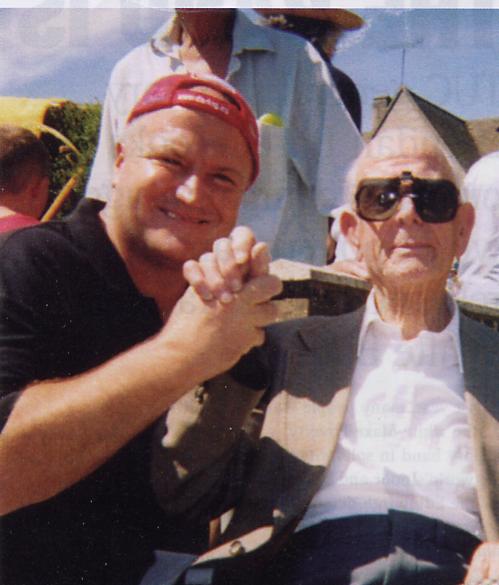
Andy Andrews - COHSE/International Brigade


Spanish Civil War Veteran & COHSE Branch Secretary to address Tolpuddle Rally 2006

Howard "Andy" Andrews, 99 years old, who served for two years as a front-line medical worker with the International Brigades during the Spanish Civil War, will address the Tolpuddle Martyrs Rally on July 16th.

Dave Chapple, member of the South West TUC Executive and President of Bridgwater Trades Union Council writes this tribute to him:

Howard Andrews was born in Kilburn, North West London, in February 1907. He joined the Royal Army Medical Corps at 16 and in 1924 was posted to Quetta, Baluchistan, British India. He never forgot the poorest Indian women of Bombay-some of them with babies on their backs- loading coal onto the steamships, and when he left the army in 1931, he immediately addressed street meetings back in Kilburn, telling people about the real British Empire. In the year of the General Strike, 1926, Andy was posted with an Indian regiment to Shanghai, to protect British "interests" there, during the massacres of Chinese communists and trades unionists by Chaing-Kai Sheck's right-wing Nationalist troops.

In North London in the early 1930's, Andy joined the Independent Labour Party and then the Communist Party. He was present when marches against both mass unemployment and Mosle's Blackshirts were viciously attacked by the police- on one occasion, during a Mosley rally at Earl's Court , Andy was thrown down flights of stairs and beaten up in full view of the police, who stood by and smiled.

In August 1936, months before the International Brigades were formed, Andy rode to Spain in an Ambulance donated by the Spanish Medical Aid Committee. He stayed in Spain as a front-line hospital worker for over two years, attached to both British and other International Brigades, and working with medics like Tudor Hart and Sinclair-Loutit.

The work was hard, tiring, and dangerous. Andy served at field hospitals during some of the toughest battles of the war, including Teruel and the Ebro. When the final great battle of the war, the Ebro, was lost, Andy and other nurses had to be ordered by a senior officer to retreat back across the river. On more than one occasion, hospitals Andy worked in were attacked by airplane or shell-fire, and he still remembers diving behind a wall to escape an Italian plane's machine gun bullets and hand-grenades.

In 1939 Andy rejoined the army and was sent to France in the Royal Artillery, being lucky enough to escape with his life at Dunkirk when German planes were straffing the beaches.

Always a trades unionist, when Andy moved to Taunton in 1955 he established a Branch of COHSE at Taunton hospital, and was Branch Secretary and Taunton Trades Council delegate until he retired at the age of 65 in 1972.

In 2006 he has joined the Taunton Peace Group, rejoined the Communist Party, and is very active on the streets of Taunton, handing out leaflets protesting against the renewal of Trident nuclear missiles.

DAVE CHAPPLE

Tuesday, October 10, 2006

Bob Quick

Bob (Robert) Quick

Appointed Regional Officer at the age of 19 in early 1975, cadet nurse at Clatterbridge General hospital, set about founding a branch of COHSE at the hospital. Undertook his general nurse training in 1973. Very active in the Nurses Pay campaign in 1974 (Co-ordinating Committee)

His father was COHSE Branch Secretary at West Cheshire branch.


Appointed Regional Officer in the North West, Labour Councillor in Liverpool during the days of Militant (While progessive, certainly not a supporter).


later COHSE Regional Secretary Yorkshire & Humberside (based in Sheffield). Very active in early trade union/COHSE support for Cuba and in particular the Cuban health union, SNTS.

NOTE:
The youngest ever COHSE Regional Officer

Dr Cyril Taylor - Liverpool COHSE


Dr Cyril Taylor

Taylor was born in 1921 in New Brighton, Liverpool to Orthodox Jewish parents. His grandfather had fled the pogroms of Eastern Europe to settle in Merseyside. The families name changing from Zadesky to Taylor (Cyril’s father occupation)

In his Youth Cyril was active in the Jewish (Zionist) Youth Movement, attending Zionist habonim camps but soon developed into a socialist. As a sixth former at Wallasey Grammar school he heard a talk about the Spanish civil war and this event had a major impact on his political beliefs. After school he trained as a medical student at Liverpool University, graduating in 1943 and began work at Alder Hey 1946-1948 later becoming a R. A.M.A.C. Major Commander at the British Hospital Khartoum then returning to Walton hospital.

He was part of a Socialist Medical Association delegation in 1946 that meet Bevan to urge him not to back down to the BMA opposition to the creation of a National Health Service. Taylor was a pioneer of Health Centres and remained active in the Socialist Medical (Health) Association all his life becoming its President.

After the war he was called up for national service and became a major in the Army which included a period in charge of the British hospital in Khartoum. However on his return he faced victimization in several jobs, including being sacked in 1949 as the Medical officer of the Liverpool Shipping Federation because he was a Communist. So in 1950 he set up his own medical practice at Sefton Drive.

He became active in the Confederation of Health Service Employees (COHSE) founding the Walton Hospital branch of COHSE and becoming it's branch secretary, active in the COHSE Medical Guild. COHSE repaid him by censuring him for referring to his COHSE membership in a Communist Party Liverpool city election address. His house become an open house for Chilean political refugees after the 1973 coup.
The costumes, props and scenery of Liverpool Unity theatre were stored in the house and the garden used for rehearsals. Norah Rushton was a close friend

Cyril left the Communist Party over Hungary invasion and was elected a Labour Councillor for Granby ward from 1965 -1980 and Chair of social services. In 1977 he moved into the purposes built Princes Park health centre in Toxteth, Liverpool. He would joke “I’m Cyril from the Wirral”. Cyril Taylor died in 2000 aged 79

Michael Walker


Note:
COHSE badge


COHSE London Region 1990

Bernard Morgan 1915-

BERNARD GEORGE HERBERT MORGAN

Bernard was born on the 25th September 1915 at 63 St John's Wood Road, London. the first of two sons the other being Edwin Charles Morgan.

His father was George Herbert Morgan a Londoner who started his employment with the Metropolitan Railway (underground) as a booking clerk. Bernard's father worked his way up through the ranks to become an Accountant for the Metropolitan Railway, he was also a very staunch member of the Railway Clerks Association (now the Transport Salaried Staff Association TSSA) Ladbroke Grove branch, his father was also a life long member of the Labour Party.

Given Bernard's father's occupation it is maybe not surprising that his father meet his mother Ada Mary Charles at a railway booking office. Bernard's mother was originally from Oakington, Cambridgeshire, but moved to London to become a Midwife at Queen Charlotte's Hospital, Edgware Road.

Bernard was born at 63 St Johns Wood Road, opposite Lords Cricket Club, however the house was bombed by Zeppelins during World War one.

Bernard left school at approx 17 and a half to 18, and like his father started work for the Metropolitan Railway as a Railway Clerk, but when the London Passenger Transport Board took over the running of the Underground Bernard was made redundant, But, he was able to get a job back with the Underground railway service as a relief booking clerk, a job he did not enjoy Bernard states " I didn't like it, I was a bit of a snap head".

Much to his fathers regret Bernard left his relief clerks post and sought a job working in the accountants department of the aeroplane makers De Haviland at the companies aircraft factory at Burntock, Edgware, North London in the days when Edgware was a major airport, during this period of the 1930s Bernard became a steward for the clerical section of the Amalgamated Engineering Union (now AEEU) and he was the unions first clerical steward in the factory.

De Haviland was a very well union organised factory , Bernard recalls "when the convenor rang the bell everyone shut down their machines and moved to the agreed assembly point"

Latter Bernard was victimised and sacked by De Haviland which lead to a strike at the factory, because of the anti strike legislation at this time, the strike was refereed to as "unpaid leave" the strike lasted a couple of weeks, meanwhile the AEU paid Bernard victimisation pay and also found himself blacklisted by all Aircraft companies. The AEU however managed to "manoeuvre"Bernard into a job as a shop fitter, a job for which he was supposed to have experience and qualifications and of which he had non, But due to the efforts of the AEU he began employment as a shop fitter for Buck & Hickman.

But within a few weeks of starting his employment he was called up as a conscript, the Second world War had caught up with Bernard., he was sent to Bradbury Barracks, Hereford with the North Staffordshire Royal Artillery, as a ac ac, searchlight, gunner on the British mainland.

It was Bernard's wish to join the Royal Medical Corps, however his Commanding Officer stated clearly to Bernard that "once your in the Royal Artillery your always in the Royal Artillery"and pointed out that as a self contained unit he could do a similar job in the Royal Artillery.

Bernard then attended a Medic course, becoming a qualified Medic & Stretcher bearer come Chiropodist.

His training came to the fore when on D Day plus one he and his colleagues were collected from Brighton and taken to Southampton were they boarded boats for France as support to the American 6th Air force ground forces at Arananches and Normandy.

Bernard says the fighting "made my hair stand on end" but as they moved forward Bernard was wounded by a bomb blast, he recouped in an American Field Hospital for three weeks, after which he rejoined the Medics and ended up at the end of the war in Grossilseda, Germany.

He was then posted to No 6 General Hospital in Hanover where he worked in a VD Clinic serving mainly American service men until he was de mobbed in early 1947. On his return to Britain he found it hard to get a job, so he returned to Germany to serve in the British Control Commission which Bernard states "worked to get Germany back on its feet" his job was secretary to two top British industrialists who were involved in establishing the first Hanover Industrial Fair on which "a fabulous amount of money was spent".

In 1951 he returned to Britain where he realised he "had to start again" to rebuild his life. So in 1952 he embarked upon a career in nursing, initially as a Student Register Mental Nurse at Tooting Bec Hospital, South London, he lived locally in digs, he joined COHSE almost immediately after starting his training and within a few months had become a steward and within eight months Bernard states he was Branch Secretary, However this was probably not until 1954, Bernard went to his first COHSE national Conference in 1952. He took over the Branch Secretaryship from Michael O'Reilly (known as Sir Michael) who was considered a bit of a live wire.

Bernard is one of the longest serving Branch secretary's of COHSE have held the post of Branch secretary from 1954 until 1993

The Tooting Bec branch of the National Asylum Workers Union a forerunner of COHSE was established in April 1913 but seems to have collapsed during the First World war being re established in 1918.

Bernard became a Staff Nurse, then Charge Nurse and the assistant Matron, Senior Nursing Officer, then he opted to become head of the Industrial Therapy Unit at Tooting Bec Hospital.

Bernard states that the most important resolution he ever moved at a COHSE conference was a resolution calling upon the union to re enter the TUC after we had been expelled for complying with Conservative anti union registration legislation in the early 1970's. To move resolution 13 at the 1972 conference Bernard had to leave his sick bed, on his first attempt he was un successful Bernard believes however that the resolution was carried, he states "I was so ill, I should have called for a card vote, i'm certain it was carried "the next conference he was more successful".

Bernard blames the General Secretary Lynch and the President Vickerstaffe for the debacle and expulsion from the TUC, which was probably one of the worst episodes in COHSE's history. Bernard in the Journal in September 1973 now an NEC member stated correctly that "We have suffered the greatest ignominy and disgrace known to a trade union" he went on to call say "No organisation can be changed from without, only from within so for goodness sake, get your branch to express a view".

The group leading the campaign to re affiliate to the TUC was Bernard, Dan Moriarty (Region 6 NEC St Bernard's Branch Secretary)

Sid Ambler (future President) of Sid Ambler Bernard states he was "left wing in those days". Bernard was an NEC member of COHSE for 15 years representing Regions 6, 13 and 8 as Region's were re organised.

"I have always considered myself on the left" states Bernard who was an early member of Group 81 (COHSE's Broad Left established in 1981)

With regard to the Labour Party of which he has been a life long member, Bernard stated he joined the Labour Party as a member of the Labour League of Youth aged 15, he was a founder member of the Paddington League of Youth which meet at the Co-op Hall, Harrow Road. he was a keen supporter of Michael Foot and Nye Bevan both strong left wingers in their early days.

The states "I believe the only way to change the Labour Party is to change it from within, Socialism is the only way forward". "and he went on to say "Labour Governments are not utopian, they make mistakes, however its up to you and I to keep them on their toes".

Bernard believes, unsurprisingly that the establishment of the National Health service was a "fantastic achievement"

On Amalgamation with NUPE & NALGO Bernard states I have always supported merger, I have always believed in the trade union motto "strength in unity" he found however that it was utterly opposed by the COHSE Full Time Officers who wanted to protect their own interests.

Bernard speech to the 1992 COHSE conference on the final Merger debate, Bernard (wearing his now famous red trousers) gave the most impressive speech, so impressive that the insuring personal attacks by those opposed to the new union attacked Bernard personanally on his age, which only served to re enforce the reasons why we were voting in favour of the new union. On the Unison Bernard has stated "We have to build a completely new union"

Bernard did not vote for Albert Spanswick in the General Secretary election's of 197? ("I think I voted for David Williams) Bernard believes that Albert Spanswick "Blossomed" and became "COHSE's best General Secretary" he was "always their leading us, although I may not have always agreed with the way he lead" vote 105 to 21 strike action began 1st April - 800 of 1,000 staff on strike  by late afternoon 2nd April management agreed to "status quo"

In April 1976 Tooting Bec hospital COHSE spearheaded by Bernard organised one of the first indefinite strike action taken by nurses in Britain, the strike lasted two days with no emergency cover and secured a victory. "no other way to retain the practices it had built up over twenty years and which management wished to eliminate"

On the 1982 dispute, Bernard believes their was a lack of leadership and believes we should have taken firmer action earlier on in the dispute. But Bernard did not believe in Emergency cover the union "should provide humanitarian cover, decided by those working in that area"

Bernard believes the 1988 Clinical Grading agreement was a "Major blunder, we walked into a trap" he explains. (Many would now disgree with that popular view at the time)

"Leadership is a very important quality" Bernard believes

Bernard has one son John by his first marriage, John is an ASLEF Train Driver on Southern region now in his 40's. Bernard's second marriage was to Una a Jamaican COHSE member working at Tooting bec.

I asked Bernard about how he would hope he would be seen by future generations of health care trade unionists " I worked hard and loyally for COHSE and would like to be remembered as a ordinary common or garden worker"

Bernard retired from the Health Service 66 days after his 65th Birthday, but when he is not gardening he still finds time everyday to go into the union office at Tooting Bec to carry out his Branch secretaryship duties

Bernard was simply one of the greatest COHSE activists

BM Interview notes with MW just after his retirement

Friday, October 06, 2006

Bexley Asylum 1901 (unionisation)

The Original Asylum Workers Union!

A Resume of 1901 at Bexley Asylum

It was a very earnest little band of workers that first hatched the plot, and decided to form an association for their own and their fellow workers mutual benefit.

Judicious discussions at the mess table and exaggerated ideas of his own importance on the part of the Medical Superintendent, somewhat hastened the project.

So we bide ourselves to a neigbouring tavern, coffee tavern, and made arrangements with the proprietor for the use of the club room.We were a poor lot, so the landlord kindly allowed us to use the room rent free, providing we paid for the gas consumed.

There were few enthusiasts, Tim Bobbin, Harry Lee, and W. Dutton, as well as your humble servant, and a host of passive supporters.

We had good attendances, at least thirty, and some-times nearly fifty came to our weekly meetings, and poured out their woes, and we even got as far as suggesting the appointment of a deputation to visit other Asylums, " with the view of forming one huge Association!!" .

In the meantime differences of opinion had arisen between the Medical Superintendent and several of our pioneers, with the result that they sought fresh pastures. Duty prevented their getting away to an occasional meeting (even if their pockets could have stood the expense).

Some months afterwards I visited the old place- there stood the heath in all it’s beauty, and the coffee tavern in all its grandeur—but the association and its members, alas ! were no more. Practically an entirely new staff had arrived at the large institution, and I turned wearily away to continue my wanderings.

Since that day one has tried many callings and places, and finally settled down in another branch of lunacy work, but it is refreshing to see the number of Attendants and Nurses who have taken advantage of the Asylum-Workers' Union in order to improve their conditions of service. For your own sake, try to rouse the others who have not yet joined; surely the low subscription is more than covered by the advantages of belonging to such a Union?

Are you aware that Asylum Attendants are worse fed and worse treated than any of the Attendants at our workhouses? There is no comparison between the two dietaries, and the conditions of service and chances of promotion which the latter has are infinitely better than the former " enjoys." The head of affairs at the workhouse is the Master—a man who has risen from the ranks—-and the doctor is subordinate to him. The result is, there is an appeal beyond the Medical Officer and one gets justice.

The Poor Law Officers' Association members are always speaking of you, and your grit, in forming a Trade Union, and admire you for it, but, if you are compelled to spend your life among the insane then get "the other fellow" to help to brighten and lighten the conditions of service. Let. your committees "know the dietary provided for officers at the workhouse nearest, to where you are engaged, and I'll guarantee your bread and butter three mornings and bacon 'four mornings per week" (this was in force at Birmingham City Asylum in 1900) will compare very poorly with the “Grubber " fare.

Mr. Editor, I have trespassed on your space for which I apologise, but I feel so convinced that many improvements could be made if members would only bestir themselves to help to make one strong body of Attendants and Nurses. Many of the Asylum Committee members are sympathetic—if you could get at them and put your side of the grievance as clearly as the Medical Superintendent puts his

Think it over

Ballybay

The National Asylum Workers Union Magazine April 1914

COHSE, TUC Suspension 1972


An open letter

Now the consequences...the shame of suspension . . . and finally the disgrace of TUCexpulsion.

To all COHSE members,

I am hoping to address this letter to you all through the medium of the Journal. Let me make it quite clear at the outset that the views I am expressing are entirely my own personal ones and not those of my branch, although I am quite certain the vast majority of my branch members and thousands of COHSE members throughout the country share my views.

To those of you who do not share my views let me say this: I do not think you
are mad, and I truly respect that you hold your views with just as much deep sincerity as I do mine, although no doubt we each believe the other to be mistaken. The consequences of COHSE's decision not to deregister are far reaching and I believe detrimental. Though there was doubt expressed at Conference by the platform as to how the TUC would act (I had no doubts
and told you so) you now know we are suspended, and that if we continue to remain on the register you must all surely know now that for certain we shall be expelled.

I urge all COHSE members even at this late hour to demand through their regional councils and branches that COHSE draws back from the brink as it were and rethink this whole issue.

Your President in his address to Conference described the Industrial Relations
Act as a vicious act by an incompetent government; how true, how very true, but
it is more than that... it is designed, for all its sugary coating, to destroy and divide the trade union movement under the ambit of the law, with the ultimate aim of state- controlled trade unions. Incompetent this government may be, but I would remind you that they are most competent in their attacks upon the working-class and more than competent in protecting the share-holders, landlords, price-rings and dividend grabbers.

It is quite wrong to look at this act in isolation. It must be judged alongside the background of their continued attacks upon the working people; it was this government who robbed the children of their free milk, put up school meals, introduced the wicked Rent Act and there is more in the pipe-line.

It was a government pf the same calibre who offered nurses a sixpenny wage in-
crease, and a Tory Minister of Health who said he was sick of the sight of nurses in uniform waving banners demanding a better deal.

The whole trade union movement is now fast becoming very much alive to the Government's anti-trade union activities and are acting in solidarity and in unision just like the COHSE motto on the front cover of your rule book, "all for one, and one for all". In the past the TUC has often been criticised for its lack of leadership and in-action, but now the TUC are acting positively, democratically and not running away. COHSE has been affiliated to the TUC, and rightly so, for many many years during which time all our officers and delegations have striven to create a most effective and worthwhile image for COHSE and recent reports have shown how very very successful they have been; to me, it would be most tragic to damage this wonderful image by one mistaken action.

COHSE supports six of the TUC's seven points against the Act. If it is argued, as a reason for not de-registering, that there is doubt as to whether the TUC's vote to oppose the Act was really as democratic as made out to be, then we should be consistent and oppose all seven points. At Conference when debating some of the nasty points about "Salmon" we were told by our Asst. Genera! Secretary most forcibly that you cannot pick out the nice bits and discard the nasty ones, but that you have to take Salmon as a whole; this is consistency let it run through all our actions.

The President in his presidential address to Conference said it was the determined intention to make COHSE and its branches the most forceful and effective voice in the Health Service. I would suggest that this can best be achieved by not wasting our energies attacking fellow trade unionists but by
using all our energy on mass recruitment,attacking policies that harm the conditions of service of our members, and playing a full role as members of a great trade union movement within the TUC and the Trades Councils.

I accept that the Industrial Relations Act is now law and I would not ask COHSE
or any trade union member to break the law. But let us be quite clear and honest: to de-register does not break the law in any way, and it is a human right (whilst obeying the law) to campaign vigorously against any unjust law. To suggest that if we deregister the government will not negotiate with us is ludicrous - you can all see for yourselves, that with over 95% of the TUC members off the register, the government still negotiates with the TUC because they know they are the voice of the whole trade union movement.

One final word-should we not, and I hope and pray that we do, change our
mistaken course and be finally expelled from the TUC, I shall not desert COHSE.I shall remain an active COHSE member, because I believe in COHSE, and I am dedicated to it; but I shall actively and honestly campaign to get us to de-register and so back within the TUC where we belong.

Let us start that active campaign now ,join with me, express your views and get
them discussed at branch and regional level, and so make the COHSE motto "all
for one, and one for all", ring loud and clear.

Thank you members.

Bernard Morgan

Tooting Bec Hospital COHSE Branch Secretary

November 1972 COHSE Journal

NAWU Branches June 1914

NAWU Branches June 1914

Abergavenny

Aylesbury

Banstead

Barnsley Hall

Bexley

Birmingham

Bodmin

Brentwood

Brookwood

Cane Hill

Cardiff

Carmarthen

Caterham

Chester

Claybury

Colney Hatch

Darenth

Derby

Devizes

Durham

Earlswood

Epsom

Exminster

Fareham

Garlands

Gloucester

Hanwell

Hayward's Heath

Hellingly

Hereford

Hill End

Hull

Killarney

Lancaster

Leavesden

Lincoln

Macclesfield

Maidstone

Menston

Mickleover

Middlesbrough

Middlesex

Morpeth

Napsbury

Netheme

Newport

Northfield

Norwich

Oxford

Portsmouth

Prestwich

Rainhill

Scalebor Park

Storthes Hall

Tooting

Wadsley

Wakefield

Wallingford

West Ham

Winwick

Central Branch

Aberdeen

Bridgend

Cotford

Dorset

Dublin

Earlswood

Fulford

Hill End

Kilkenny

Portrane

Powick

Three Counties

Whittingham

York


National Asylum Workers Union Branches 1914

COHSE Guilds Circa 1947

COHSE Rule 8.—COHSE GUILDS.

(i) Members of the Union shall be further classified into Guilds, to ensure that the professional and. special interests, which are not common to all members, are preserved and secured. Members shall, therefore, be classified into the following Guilds ;—

(a) Clerical and Administrative Guild.

(b) Guild of Nurses.

(c) Guild of Mental Nurses and Mental Deficiency Nurses.

(d) Medical Services Guild.

(e) Ambulance Services Guild.

(f) General Health Service Employees'Guild.

(g) Voluntary Hospitals Guild, pending the introduction of some scheme of complete unification as envisaged by the Government's proposals.

(ii) Each Regional Council, when established, shall consider the development of the Guild system, and in such cases as the membership demand, permission shall be given for any of the Guilds within the Region to establish a small representative Committee of the members of the Guild to advise the Regional Council or its Executive Committee on any matter peculiar to the particular Guild. Such Committees may submit resolutions to the Regional Council or Regional Executive Committee for consideration. It must be clearly defined that vital questions of policy affecting the Union as a National entity are not to be considered by these Committees, but by the established Branches and Regional Councils.

(iii) Separate Guild Branches are not to be established. The whole of the membership in any Hospital, Institution, or Department is to be contained in the one established Branch. It shall be. the duty of the established Branch to appoint, as far as practicable, Sectional or Guild Collectors, and to ensure that on the Branch Executive Committee direct representation of the section is afforded, based on membership.

(iv). The rational Executive Committee shall be empowered to receive a deputation from any of the established Guilds on matters solely related to the professional or special interests of the particular Guild.

(v) The National Executive Committee shall be empowered, in such particular Guild as it feels necessary", to establish a small National Advisory Committee of such Guild, consisting of representatives of the Regions for the purpose of acting as an advisory Committee to the National Executive Committee or, for any particular Guild on any specific issue arising, to call a representative conference of regional representatives of the particular Guild concerned.

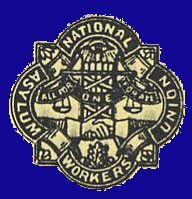
NAWU badge 1914


Is There Any Demand for a Union Badge ?

For two years or so the question of a union badge has graced the agendas of successive Executive Council meetings and Annual conferences; and time after time the subject has been left “to lie on the table”, which in other words means that it is not considered to be of such pressing importance that time need be wasted in discussing it.

Now there must of necessity, be either demand for a badge, or no demand for one, and in the latter case the matter might just as well be dropped straight away and have done with it.

On the other hand, judging by the correspondence received at headquarters from time to time, there does appear to be a a genuine demand from many quarters. And it has been suggested to us that if the Union does not soon adopt an official badge the London County Council section of the Union will obtain one of their own!

This, of course, would be an undesirable (and we might add, unauthorised) proceeding, and it would be a ridiculous state of affair, for different " Circles" of the Union to have different kinds of badges. We must have unity on the badges' question as on any other.

We believe we are right in stating that as a Union without a badge we are somewhat unique in the trade union world, and our own opinion is that thew N.A.W.U (National Asylum Workers Union) will eventually find, as apparently all other Trade Unions have found, that a distinctive emblem of the Society is not only a valuable organising agent, but has a great moral effect upon the loyalty of existing (but " shaky ") members.

The accompanying draft badge (specially designed in colour, for us by Messrs Fattorini, of Bradford, who also kindly supplied the block) is reproduced in order

that members may have an opportunity of judging for themselves whether an artistic badge would be invaluable asset to the NAWU Union or a wasteful extravagance.

The badge would, of course, be enameled-faced in beautiful colours, and could be made in the form of pendants or studs for men, and brooches for the ladies The design reproduced on this page is the actual site of the suggested badge.

The few objections we have heard to the badge idea are herewith disposed of;—

  1. The authorities would not allow them to be worn Answer: Some would; some wouldn’t. In any case the authorities could not prevent the wearing of a pendant on a watch-chain while on duty. decent badge could be worn when off duty

2: Members who lapsed, having paid for the badges could still wear them, even though no longer members of the union

Answer: They could , but they wouldn’t if they were pilloried in the Magazine for wearing a union badge when no longer members, In this case, of course, the local Branches should be empowered to buy back the badges from lapsed members.

Are there any other objections ?

We shall be glad to hear from ALL Branches on the subject, favorably or otherwise.

National Asylum Workers Union Magazine 1914

NAWU badges 9d each, silver badges 4s 6d and gold badges £1 each

Thursday, October 05, 2006

COHSE London Radical Nurses 1988


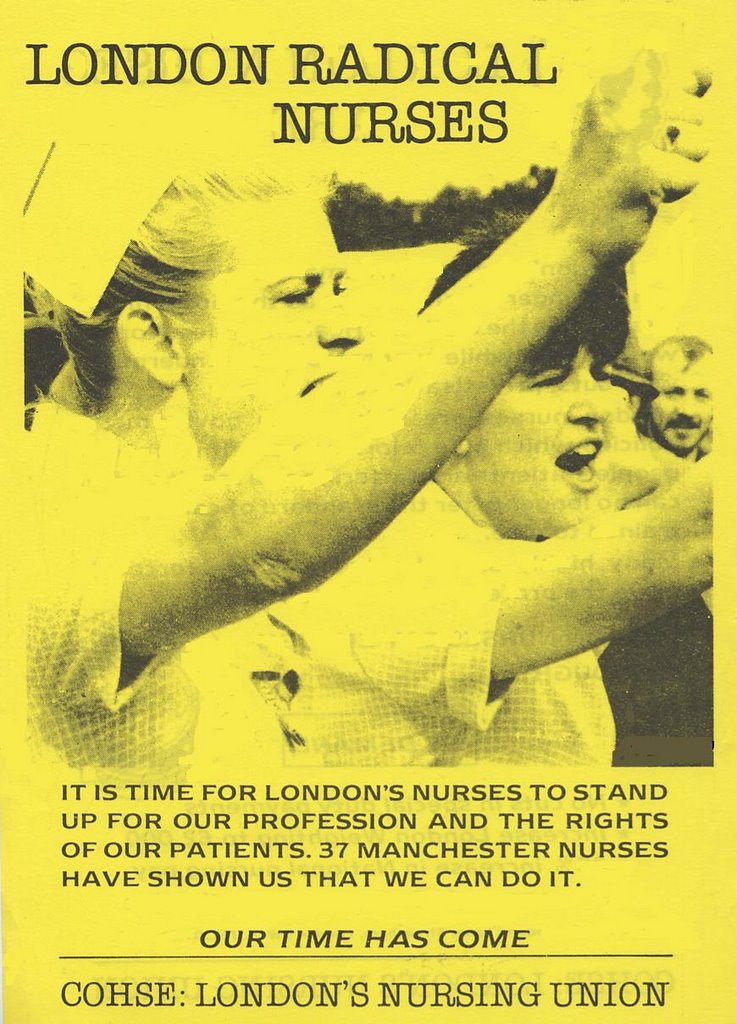
COHSE London Radical Nurses 1988 Leaflet

As London's nurses we demand action now.
We can no longer sit and watch as the Government dismantles the National Health Service.
Nor can we just wait while our profession is undermined with cuts, privatisation and low pay.


London nurses are sick of the governments policies which give priority to profit instead of people. Patients are suffering as a result and we can no longer offer the standard of care we are trained to give, Many highly skilled colleagues are forced to leave the profession due to low pay.


* No cuts in special duty payments


* Increase London Weighting to £2,000

*20% increase in National nursing pay

*No more cuts & no more privatisation

COHSE 112 Greyhound Lane, Streatham, London, SW16
COHSE: London's Nursing Union

Wednesday, October 04, 2006

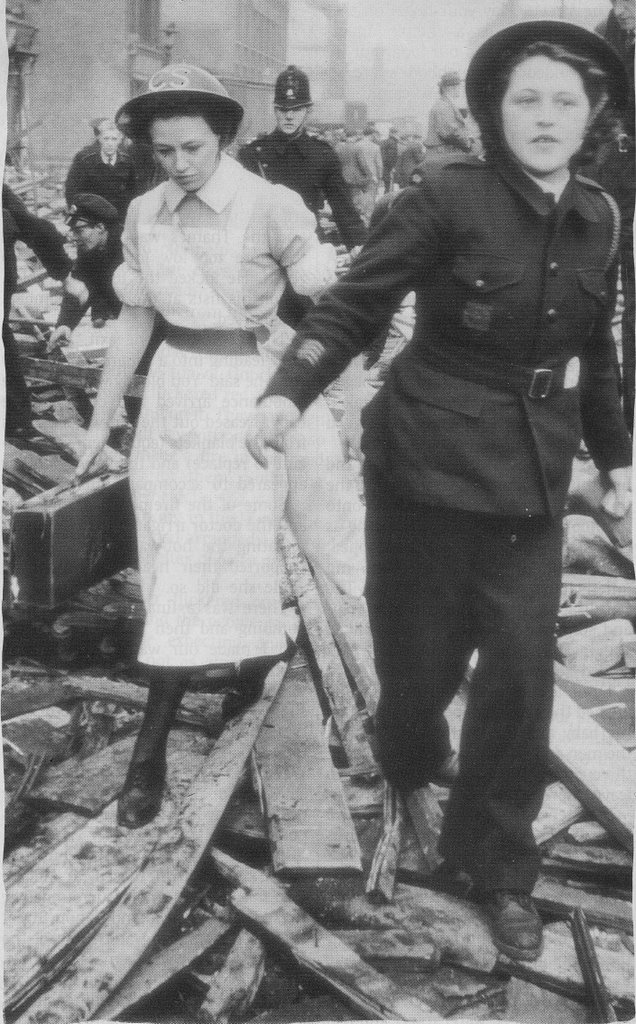
London Blitz 1940


Daily Herald

Friday 15th November 1940

Night Raiders Bomb 2 London Hospitals
By Frank Smith Herald Reporter

Sixty old women, all bedridden chronic patients, were in bed in the ward of a London hospital last night when a high explosive bomb crashed through the building and exploded on the ground floor.The bomb fell before the alert was sounded.

Nurses, doctors, students and porters rushed to the spot and found one end of
the ward a, heap of smoking rubble with beds and patients buried beneath it.

Digging Into the debris with their bare hands, they soon reached some of the women, and within half an hour had cleared the block.

Three of the patients and a sister, however, had been killed by the explosion.

Four Fell

Four bombs fell on the hospital premises; three burst in the grounds, doing no damage.

It was the fourth which hit the chronic patients" block, a 'three-storied building, and plunged through two floors before exploding on the ground floor where the old women had been taken for extra safety.

"I cannot speak highly enough of the work of the staff," the Medical Superintendent told me.

“I soon reached the bombed block, but when I got there I found the nurses going calmly round the litter-covered beds soothing the patients”

"Male members of the staff were already searching the debris, and the co-operation of everyone was magnificent.

Remained Calm

"One end •of the ward was demolished, but there was another door the other end, and we were able to get the-patients out that way

‘All the patients are somewhere around eighty years old, and a few of them were in tears, but the majority remained calm all through the ordeal."

Houses near the hospital were also hit, and people were buried beneath the debris,

Bombs also fell on a maternity hospital in the London area. Mothers, babies and staff escaped.There were I8 mothers and I4 babies in a specially-protected ward on the ground floor,

Causalities were caused when bombs fell on a London school used as an A.F.S and Ambulance station

London Blackout;

5.39pm.-7.51 am

MOON RISES 5.52pm

NOTE: This sound like the bombing of the Royal London Hospital