Wednesday, May 25, 2016
Friday, October 16, 2015
Sunday, September 15, 2013
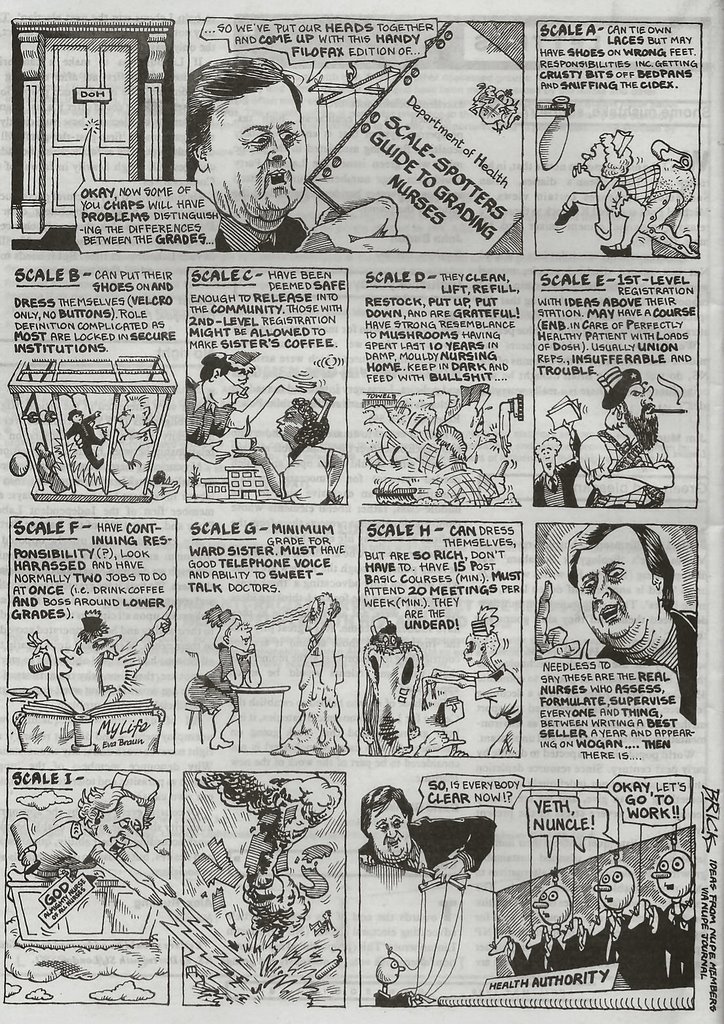
Nurses Strike 1988
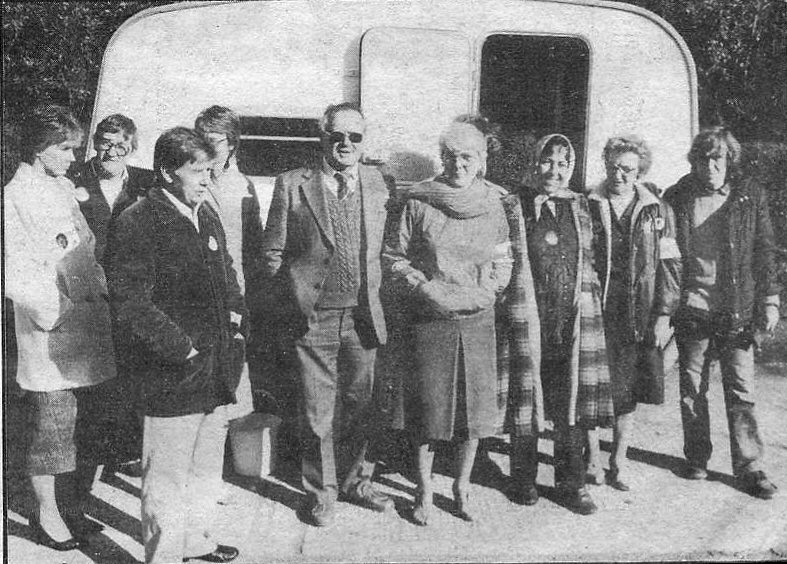
Edinburgh NUPE Nurses against privatisation of hospital cleaning services
Bethnal Green Hospital - The First Casualty Dept Work-In 1978
Hospital staff at Bethnal Green hospital, east London were told in October 1977 that the local Area Health Authority wanted to reduce services at the hospital to just care of the elderly. Immediately a Tower Hamlets Action Committee was established with over 700 people attending the first meeting held on 24th November 1977.
On the 26th November, 102 East London GP's signed a 13 point statement opposing the closure
Bethnal Green and Stepney Trades Union Council issued a detailed paper objecting to the plans and asking that alternatives be drawn up to develop Bethnal Green.
On the 28th January 1978 over 500 attended a march from Weavers Field to the London Hospital to protest at the closures.
In March it was agreed that a regular picketing of the hospital should take place to highlight the plight of the hospital
On the16th March 1978 at another huge meeting Bethnal Green Hospital is declared unanimously a "protected hospital"
A planned march against hospital closures in East London arranged by Plaistow Hospital campaign on 18th March is banned by the police due to events in Lewisham
30th March 1978 60,000 marches pass Bethnal Green hospital on their way to the Rock Against racism Carnival in Victoria Park
10th March a 2 hour stoppage is staged in five East London hospital's in opposition to the health cuts
30th March East London Hospital unions call strike action in nine hospitals for between six and twenty four hours, the Royal London and Mile End hospitals stop all routine work for 24 hours. 800 campaigners march to the Health Authority headquarters to protest
THE WORK-IN BEGINS
1st July 1978 at 8pm ,the time of the official closure, the hospital staff, applauded by a large crowd of local people and filmed by the News at Ten (ITV) put up a notice announcing the occupation of the casualty unit at Bethnal Green hospital. Detailed arrangements are made with medical staff, GP's , The Emergency Bed Service (EBS) to guarantee admissions and safety.
The first hospital casualty work-in in history begins with patients arriving at 8:02
On the 30th July managers arrive at the hospital threatening staff with legal action, nursing staff instruct under threat of dismissal to move, medical staff who refuse to do so are "harangued" and threatened. The Bethnal green Hospital work-in is called off on 3oth July 1978 having treated over one thousand local patients
Key individuals included - Many volunteers and Dr David Widgery ,Dr Leibson, Dr Thompson, Mr Frohn (Consultant) Sister Gainsford, Mrs Cox NUPE,, Zena Lee, Ann Sargent, Albert Vanner, Jane Salvage, Kambiz Boomla any many others
Keep Bethnal Green Hospital Campaign booklet
The NHS in East London - What Lies Ahead ? Jane Salvage and Kambiz Boomla
Bethnal Green Hospital was occupied by staff and supporters on 1st July 1978
Thursday, July 11, 2013
Friday, June 07, 2013
The Battle to Save - St Leonards Hospital (Hackney)
Demonstration 26th September 1983
St Leonard's, (Hackney) Hospital Occupation 3rd July 1984 - 16th July 1984
In 1979 despite opposition in the form of a day of action and a a march attended by over one thousand people, St Leonard's Hospital (Hackney) A and E Department was closed.
By the early 1980's the future of the whole hospital was looking bleak, by late 1983 the Health Authority was actively looking to close the hospital under pressure from a Conservative Government keen to make cuts. A large rally was organised to oppose closure plans on 26th September 1983 addressed by Rodney Bickerstaffe NUPE General Secretary and Tony Benn MP,
At a Health Authority meeting to ratify the cuts and closures at Hackney Town hall on that day ( 26th September 1983) the Health Authority and its multi millionaire, Jockey Club chairman Louis Freedman were overwhelmed in a turbulent day of protest culminations in them being forced to abandon the meeting after the town hall surrounded by thousands of angry locals opposing the closure plans,
As Millionaire President Louis Freedman refused to use his casting vote to settle the closure issue, demonstrates demanded increasingly vocally that he use his vote (To save the hospital) in his prevaricate to vote the doors to the Council chamber were barred and padlocked after a 20 minute stand off he was escorted out of the building with the help of local Labour MP Brian Sedgemore.
Freeman who lived in a central London penthouse and had private health insurance said in the Daily Mail "We might as well be living in a dictatorship"
The incident was labelled a riot in the Evening Standard and Daily Mirror, and while their was an attempt to keep the Board members in the meeting and to stop them voting in private, not one person was reported as being injured on either side.
The disturbance was carried on all the main news channels that night and newspapers the next day and ensured health moved nationally up the political agenda.
On the 7th June 1984 Norman Fowler, Tory Secretary of State announced his decision to close all wards and remove all beds at St Leonard's and leave just a first aid unit and a handful of community based services.
In response a small working group was established by the staff and Hackney health emergency to look into the possibility of the 180 staff working at St Leonard's organising an occupation or work-in of the hospital
A decision was made to occupy the hospital on the 3rd July 1984
The occupation was ratified by a staff meeting of eighty staff on 4th July
But by the 5th July (NHS Day) the management had somehow managed to secure and issue writs and summons against the key stewards. As NUPE had not made the occupation official, and fearing an injunction (similar to that used against the Miners) NUPE officers removed NUPE placards and began to distance themselves from the occupation..
The legal situation must have been worrying for staff and the union, because it was against the backdrop of anti union legislation which was still confusing and unstable.
So on the 16th July management reposed the hospital, sending in security staff and bailiffs (probably illegally) to end the occupation.
In the next three days management systematically interviewed staff and reps and suspended key stewards.
However, local trade unionists organised a picket line has been maintained 24 hours a day outside the hospital and the drivers from the London Ambulance Station refused to move the patients out
Not satisfied with victimising local union representatives,and intimidating other members of staff involved in in the occupation, the management also seem to have gone out of their way to make life uncomfortable as possible for the patients remaining in the hospital (who refused to move, by threatening legal action).
After the Occupation was smashed and in order to proceed with their closure plans against management employed a whole private army of security guards.
This gang of mercenaries, as one local campaigner described them, cost the Health Authority almost £1,000 a day, money which was desperately needed to restore the crumbling services in the District.
There were also horrific reports of frail, elderly patients being bundled out in the early morning or late at night, driven to other hospitals, torn away from staff they knew and their possessions being sent on much later because they hadn't been told they were to be permanently moved.
So ended another brave attempt to defend the peoples health service in Hackney.

Hospital Closurers
Poplar Hospital closed in 1975
Metropolitan Hospital closed in 1976
Plaistow Maternity hospital closed in 1977 (after an occupation)
Invalid and Crippled Cchildren's hospital closed 1977
Bethnal Green Hospital 1978 (Occupation June 1976-Dec 1978) saved
Key NUPE People involved
Dorothy Hardon NUPE Area Officer
Ian Barber NUPE Area Officer
Jim Bewsher NUPE Area Officer
Harry Barker NUPE London Divisional Officer
Godfry Eastwood NUPE Asst London Divisional Officer
Morris Kollander NUPE Branch Secretary St Barts
Mike Gamble NUPE Secretary Group Six Hospitals
Geoff Craig NUPE Steward
Friday, May 31, 2013
NUPE/UNISON TV 1991
Trade unions are increasingly thinking seriously about the use of video to get their messages across to their members, potential members and to the public.
Both NUPE and NALGO now have experience of production and a range of applications.
NALGO, I understand, has so far limited itself mainly to top-quality production working out at about £1,000 a minute, but of late it has also produced a couple of 'cheap and cheerful' videos for short-life use.
Like other unions NALGO has been particularly concerned about the difficult problem of getting branches to use the videos that are available.
In 1984 NUPE took its video-production programme a stage farther by establishing an 'in-house' facility, and at the same time was able to tackle the problem of distribution and use.
It was evident to us that, at costs ranging from £15,000 to £50,000 from specialist producers, few unions could afford to produce many videos. And if few were produced, it would be impossible to build a video 'culture' within the union.
To build that culture we needed to create an expectancy in our members, by regularly delivering videos on a range of subjects and issues. That, in turn, would encourage the organisation of opportunities to use the tapes.
The 'in-house' facility comprises a small studio equipped to film, edit and copy tapes. Each of our 11 NUPE divisions was also supplied with video-cassette recorders and television monitors to encourage and facilitate the viewing of tapes.
The overall cost of all this was around the price of two middle-of-the-range commercially produced tapes, and it has already paid for itself through the videos we have made and other uses to which the equipment has been put.
Apart from reducing the production cost, our own facilities have given us the benefits of flexibility and immediacy of production. The tapes we have produced so far include productions on women in the union and on combating racism, campaigning tapes on key issues such as the health service and the political fund ballot, and information tapes on changes in local government manual pay.
Whenever we produce a tape, we issue discussion notes or work-books, so that the tapes are used actively and collectively and not viewed individually and passively.
We use close-circuit television at our national conference and video-record the proceedings. That not only provides a complete record; it also enables us to create edited compilations for use on courses,showing potential and new delegates how conference works and encouraging them to participate in debates.
A video library has been set up at Head Office, with over 300 titles available on free loan to branches, with a catalogue and a leaflet to branches keeping members aware of what's available. A viewer's record card is sent out with every tape borrowed, and from this we can monitor the use and value of the tapes.
Now we are developing a programme of media training for key members and officers of the union.
We are hoping also to produce a quarterly 'NUPE.News' video, about 15-20 minutes long, dealing with the 'topics of the day'. It would have a national flavour, but include a regional slot for presenting a key development or dispute.
The material gathered for the news video could also be used in other videos used for campaigning purposes.
Individual items could provide the basis for 5-to-10-minute campaign or information tapes. For example, the footage shot for a 3-minute item on water privatisation in the news tape could be used for a range of tapes on specific issues - for anglers, conservationists and consumer groups, as well as for members. In this way we can make interesting, thematic and continuous use of material instead of confining ourselves to the occasional tape on a specific issue in isolation from other developments.
I would go farther and argue that the trade union movement needs to-be even more adventurous and take advantage, through video, of developments in satellite and cable TV. But that must be the subject of a separate article.
Jim Sutherland NUPE Education Officer
December 1991
Sunday, January 08, 2012
Monday, October 25, 2010
Hayes Cottage Hospital Occupation 25th October 1983


Hayes Cottage hospital, West London. Occupied 25th October 1983 until late December 1983, when the local health authority backed down and the hospital was saved.
Marge Bayne and Sylvia Tebbenham led the Occupation for the staff members of COHSE and NUPE.
Northwood & Pinner Cottage Hospital was also occupied at the same time starting 26th October, led by the Matron Jean Carey COHSE member.
This is a list of Hospital Occupations/Work in's
I have secured from various accounts.
HOSPITAL OCCUPATIONS IN BRITAIN
Rainhill Asylum 1913
Radcliffe (Nottingham) Asylum 1933
Elizabeth Garret Anderson Nov 1976 - 1978
South London Weir 1976
Cane Hill Hospital Sit in 18-21 August 1976
South Middlesex 1977
Plaistow Maternity 1977
Hounslow March 1977- Oct 1979
Bethnal Green July 1978
Brookwood May 1978
St Benedicts (Tooting) Nov 1978- Sept 1980
Etwall Dec 1979 - March 1980
St Georges (Hyde Park) Jan 1980
Longworth (Oxford) Dec 1980 Feb 1981
Princess Mary Feb-April 1980
St Marys Harrow Rd 1981
Brookwood 1982
Woodgreen & Southgate Oct 1982 - Dec 1982
Thornton View 5th Aug 1983-1985
Hayes Cottage Hospital Oct-Dec 1983
Northwood & Pinner Cottage Hospital Oct-Dec 1983
Botleys Park Dec 1983
Harpenden Memorial Hospital (Maternity) 2 weeks February-March 1985
South London Women's Hospital (Clapham) 26th July1984-1985
Neasden 1986
St Leonards, (Hackney) 3rd July 1984 - 16th July 1984
Wards at UCLH
NHS Direct Exeter 1st May 2012
NHS Direct Nottingham 5th July 2012
Monday, January 05, 2009
Hammersmith Hospital Strike 1984

Hammersmith Hospital
In 1983 the Conservative Party keen to destroy public services decided to force through privatisation of hospital cleaning. This led to cuts of 50% in cleaning staff, poor pay and more importantly a massive increase in infection rates.
One of the first contracts to be awarded to the private sector (as the NHS Cleaning staff refused to cut their staff and pay) was at Hammersmith hospital. The subsequent strike was one of the most aggressive fought and included occupations and breaking up of Board meetings.
The contract went to Mediclean (who also won contracts at St Helier, Sutton and Bridge Hospital, Essex. The £450,000 Hammersmith contract started on 28th January 1985.
While a majority of the NUPE and COHSE members struck, a significant minority remained in work and the strike divided by country, the Irish and Portuguese being the strongest. helped no doubt that the NUPE Branch secretary Lydia Fraser was Portuguese (her husband Pete Fraser was NUPE branch secretary at St Charles Hospital. While a number of the COHSE branch officers were Irish.
Not all workers had their pay cut the contract manager Simon Cox at Hammersmith it was discovered was on £15,000 a year. COHSE was able to secure the pay and benefits package for all key Mediclean staff much to Medicleans embarrassment, this included BUPA coverage and top of the range cars while cleaning staff had their pay cut, holidays, sick pay, pensions, overtinme and weekend rates.
The Cleaning staff at Hammersmith Hospitalwas was cut from the original 220 staff to 158 and the number of full time staff was cut from 122 to just 28.
Withe regard to cleaning hours in the contracts they were cut from 6,170 to 2,802 per week hardly surprising that "so called" savings were made. but this was at the direct cost of hospital cleanliness. Today over 70% of hospital cleaning contracts are still in the private sector and the Tories have a cheek to complain about dirty NHS hospitals....who made them dirty ?.
Below right Lydia and Pete Fraser at COHSE Conference 1984
Thursday, December 11, 2008
St Georges Hospital 1988
Sunday, February 17, 2008
Sunday, October 28, 2007
The Sackers Charter 1982
Stephen Halpern (Health Service Journal)
Senior trade union officials have accused 'maverick managers' in the NHS of using the DHSS (Department of Health & Social Security) memo to regional personnel officers on managers and union activity as a justification for clamping down on trade union officials.
The accusations were made by Nupe officials at a press conference held to explain the union's position on the dismissal of deputy head porter Conway Xavier, from Great Ormond Street Hospital.
Last week Mr Xavier's appeal to the hospital Board of Governors was dismissed. A planned picket at the hospital on the day of the appeal was cancelled by the union because of lack of support.
Mr Xavier was dismissed for neglect of essential duties', unauthorised absences from duty, disregard for his management responsibilities and failure to 'behave with commitment or loyalty to local management'.
Nupe claims that his dismissal was the result of a campaign of victimisation against Mr Xavier and that tills is being extended to other union officials at Great Ormond Street and associated hospitals.
At the press conference Nupe divisional officer. Harry Barker, said he was 'worried about the repercussions of the memo.
He added that the memo was without doubt the background to Mr Xavier's case.
He also claimed that health service managers didn't support the use of the memo and also the way in which Mr Xavier's case was handled.
"We are conscious that many senior administrators in London are concerned at the way the management handled the situation", he said.
Mr Barker and other Nupe officials said that although most NHS managers didn't feel the need for guidance to deal with conflict of loyalty between management and trade union responsibility some 'maverick managers' were using the memo to deal with trade union activity.
The Hospital Administrator at Great Ormond Street, Austin Lythe, strenuously denied the memo had in any way been never ' been any conflict of the memo had in any way been connected with Mr Xavier's case.
He said there was no victimisation campaign against trade union officials at the hospital and he hadn't even heard of the memo until after the question of Mr Xaviers conduct was being considered
Mr Lythe said there was no reason why industrial relations at the hospital shouldn't be excellent. He hoped that the hospital would be able to get on with its job of looking after sick children.
While Nupe's accusations against the management of Great Ormond Street are not supported, their claim that most managers do not feel the need for central support and guidance is accurate.
Regional personnel officers are believed to have told the DHSS that guidance was unnecessary and this view is backed by Martin Beardwell, chairman of the National Association of Health Service Personnel Officers, who told the Journal:
'The NHS has years of experience of trade union within the management structure. theres never been sny conflict of interest that cant be coped with Most personnel officers in the NHS are members of a trade union and never have any difficulty negotiating with members of their own union" he added
Mr Beardwell described the type of guidance referred to in the memo' as 'quite superfluous'.
Since the existence of the memo was first publicly revealed by the Journal on 12 December, it has caused a storm of controversy in several areas, with the exception of NHS managers for whom it was meant.
Shadow health spokesman, Gwynneth Dunwoody. has raised the matter in Parliament and Secretary of State, Patrick Jenkin, has said he refuses to withdraw it.
The memo has also caused a storm at COHSE, where the assistant press secretary, Chris Perry, left his job in protest at the union's response to the memo, General secretary, Albert Spanswick, decided to protest privately to Patrick Jenkin rather than making the matterpublic.
NOTE:
circa 1982-83
The "Sackers Charter" as the memo was referred to was the result of some managerial staff such as those in South West London who became involved with the campaign to save st Benedict's Hospital.
Two COHSE officers were suspended over the alleged leaking of the "Sackers Charter" to the press
see also articles in Daily Mirror and Hospital worker
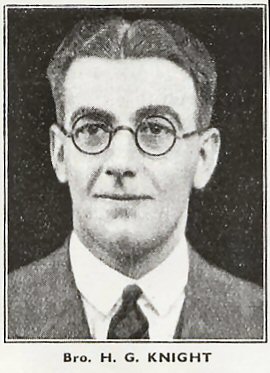
Conway Xavier was a prominent Afro-Caribbean NUPE health activists member of the Communist Party but later joined the NCP
Tuesday, February 06, 2007
Sunday, September 24, 2006
THE NUPE CHARTER FOR MENTAL HOSPITAL EMPLOYEES (1938)

THE NUPE CHARTER FOR MENTAL HOSPITAL EMPLOYEES (1938)
By
1. Hours of DUTY – 96 hour fortnight with complete elimination of the spread-over system
2. OVERTIME – To rank for special duty pay, and “time in lieu” to be discouraged.
3. ANNUAL LEAVE - Indoor Staff: A minimum of one month with full pay; additional leave to be granted in special cases. Outdoor Staff: A minimum of three weeks with full pay.
4. SICK PAY - A minimum of 13 weeks full and 13 weeks half-pay, with extension at the discretion of the Committee. Periods of sickness or accident due to service to be paid at full-salary scale during the whole period absent from duty.
5. PERMANENT DISABILITY - Adequate compensation should be paid in cases of permanent disability arising from cases of disease, illness or injury contracted or sustained during the normal course of duty.
6. RATES OF PAY - Complete revision of present rates of pay and incremental scales.
7. NURSES' HOMES - Nurses should have freedom of choice regarding place of residence, but when Nurses' Homes are established, full amenities for privacy to be provided. Indoor and outdoor facilities for study and recreation.
8. HIGHER GRADE PAYMENTS - Payment for all higher grade duties to commence from the time the duties are undertaken.
9. AFTER-DUTY PASSES - Resident Staff to be brought into conformity with this regulation in the L.C.C. Public Health Department.
10. RESTRICTIONS. - The abolition of all unnecessary restrictions.
If you agree with this Charter and are not already a member of an active trade union, join N.U.P.E. to-day and let us get on with the job.
NUPE Journal June 1938
Wednesday, July 19, 2006
NUPE Nurses 1937

Nurses Must Organise.
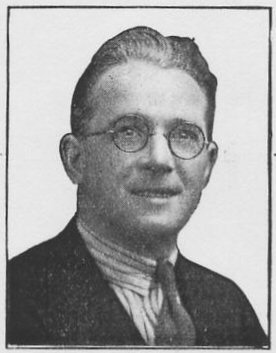
by Arthur Moyle
NUPE Journal October 1937
Nurses, however, must realise that improvements in their conditions of service will come only when they have the good sense to organise, just as other professions have done, through their appropriate trade unions. To do so is neither unprofessional nor revolutionary. It is, in fact, essential to good administration.
There are 32,824 nurses employed in Greater London and there is not 20 per cent. of them effectively organised. The National Union of Public employees (NUPE) has done much to improve conditions of service for nurses, both men and female, in municipal establishments.
Having become conscious of their grievances. Nurses should now realise the need to organise and the power that would ensue to make their profession not only a noble one but an attractive one.
The general discontent amongst nurses and their lack of organisation constitutes N.U.P.E.'s opportunity to render them effective service.' The long hours and low pay of nurses is a menace, and imposes a severe handicap upon our efforts to.
Improve the general standard of conditions of Hospital Staffs. It is urged, therefore, upon all N.U.P.E: membership to rally to our efforts to organise Nurses, and thus make N.U.P.E. the premier organisation for Nurses employed in local government establishments.
What we must aim at is :—
1) A standard minimum of salary scales and conditions of service comparable with other professions.
2) A maximum 48-hour week worked on a straight-duty basis.
3) The complete abolition of unnecessary, childish, irritating restrictions.
4) Probationers to be freed from manual duties irrelevant to nursing by the appointment of women orderlies.
Granted those reforms, there will be plenty of girls of the right type eager to enter the nursing profession.
Note
Arthur Moyle later Labour MP for Birmingham
Wednesday, April 26, 2006
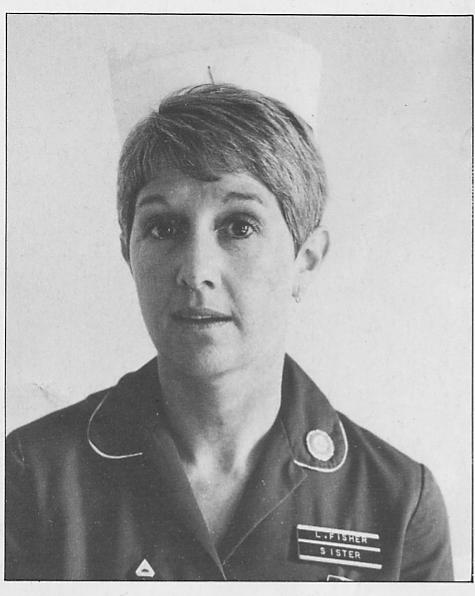
Why Nurses should strike (1988)
Lesley Fisher, I work as a night sister at
cutting taxes rather than increasing health service funding. They are amazed at the hypocrisy of a government that, in the same week as it claims to care about shortage of specialist nurses, attempts to cut special duty payments. Nurses are incensed by Mrs Thatcher's speech in which she insisted that it is we nurses, driven to this action and at the end of our tether, who are guilty of ruining the NHS.
NURSING TIMES FEBRUARY 3.VOL 84, NO 5. 1988
Note
Lesley Fisher former UNISON national health care sector Chair UNISON London health care sector chair until 2007 - still 85% UNISON membership in her Haringey (St Ann's Hospital) branch
Born in Belfast 19 October 1946 , , came to Addenbrookes, Cambridge to train as a nurse, later worked at the Elizabeth Garratt Anderson (EGA) where she be came involved in NUPE, later worked at Wood Green and Southgate hospital) and St Ann's Hospital